
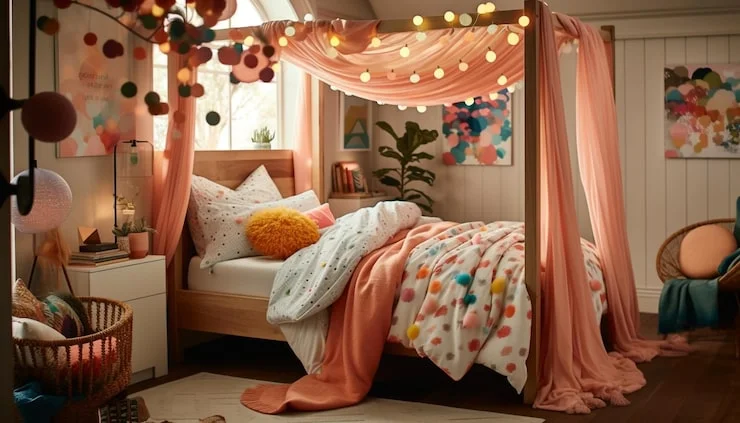
A small bedroom does not have to feel like a cramped box. With the right choices, a tight room can become the coziest spot in your home. The secret is not about squeezing in more things. It is about choosing every item with care and placing it where it works hardest.
This guide walks through practical, tested ways to bring warmth and comfort into a small bedroom. Each idea focuses on real changes you can make, whether you rent or own, and whether your budget is tight or cozy bedroom ideas for small rooms.
Start With the Bed and Where It Sits
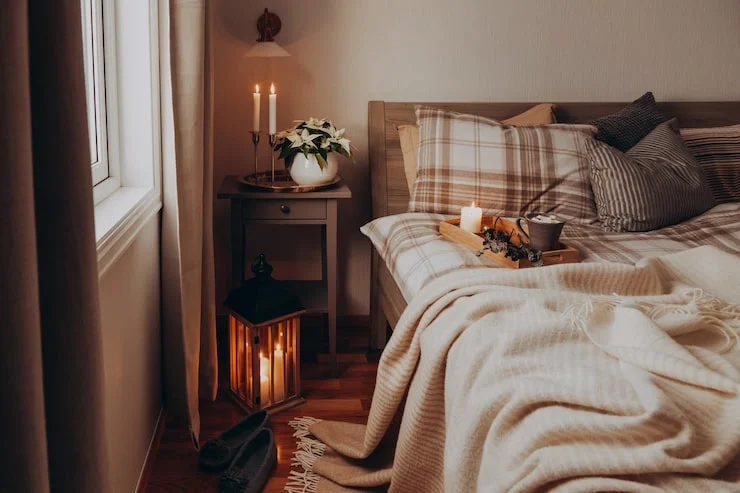
The bed takes up most of the floor in a small room. Where it goes decides how everything else feels. Put the head of the bed against the longest solid wall you have. Avoid placing it under a window or directly facing a door if you can help it . A bed tucked into a corner, with two walls holding it, feels secure and grounded. That feeling of being held is what cozy means in a small space.
If the door opens straight onto the bed, turn the bed so you can see the doorway from your pillow without the bed blocking your path. Lying down in a room where you can see the entrance feels calmer than lying with your back to it . This small shift changes how the whole room reads.
One more thing about furniture: resist the urge to buy many small pieces. Several narrow tables and tiny shelves break up the room and create visual noise. A few larger, streamlined pieces with visible legs and hidden storage make the space feel calmer and more open . Legs let light and air pass underneath, which keeps the floor from looking heavy.
Read Also: Small Bathroom Remodel Ideas With Shower
Light the Room From Below Eye Level
The ceiling light is not your friend in a small bedroom. A room lit from above looks like a fitting room. The same room lit from one low lamp looks like evening . This single change does more for coziness than almost anything else.
Put a small shaded lamp on your nightstand. Make sure the shade is opaque enough that you see the glow, not the bare bulb. If you have a dresser or shelf across the room, add a second small lamp there. Two low lights give the room depth and a far edge, so it does not feel like a cave with one bright spot.
Once the lamps are doing the work, the overhead fixture becomes what it should be: the light you use to find a sock in the morning and never after dinner. Warm bulbs, around 2700K to 3000K, are gentler on your eyes and less likely to keep you awake . If you rent and cannot rewire anything, plug-in wall sconces and battery-powered table lamps solve the problem without touching a single wire .
Let the Bedding Do the Decorating
In a small bedroom, wall space is scarce. The bed already covers most of the room’s visual area. That means the bedding is the decorating . The duvet, the pillowcases, the blanket folded at the foot: this is where the room’s color and softness live.
Choose natural fabrics with some weight. Linen that creases, cotton with a bit of texture, a wool or cotton throw heavy enough to stay where you fold it. Two or three tones that sit near each other read calmer than one flat color, and they hide the ordinary wrinkles of a bed that gets slept in . A soft terracotta or a muted mustard as an accent can bring warmth without overwhelming a small space .
The practical rule is simple. If something in the room can be soft, let it be soft. A rug beside the bed where your feet land first thing in the morning. A cushion on the one chair you have. A curtain that reaches the floor instead of stopping at the sill. Small rooms have hard surfaces close together, and softness is what stops them from feeling bare or cold .
Keep One Surface Completely Clear
A small bedroom shows mess faster than any other room. Every surface is visible from the bed. You lie down and the room reports back to you: the stack of things on the dresser, the chair buried under clothes, the nightstand crowded with cups and cables.
The answer is not to clear everything at once. That is a project you will put off. The answer is to keep one surface genuinely, permanently clear. The nightstand is the natural choice. It is the surface you see last at night and first in the morning. A lamp, a book, a glass of water. Nothing else .
When one surface in a small room is always calm, your eye has somewhere to rest. The rest of the room gets more grace. Give the things that usually pile up a closed home. A drawer, a box under the bed, a hook behind the door for clothes that are not dirty enough to wash and not clean enough to fold .
Use Mirrors and Curtains to Trick the Eye
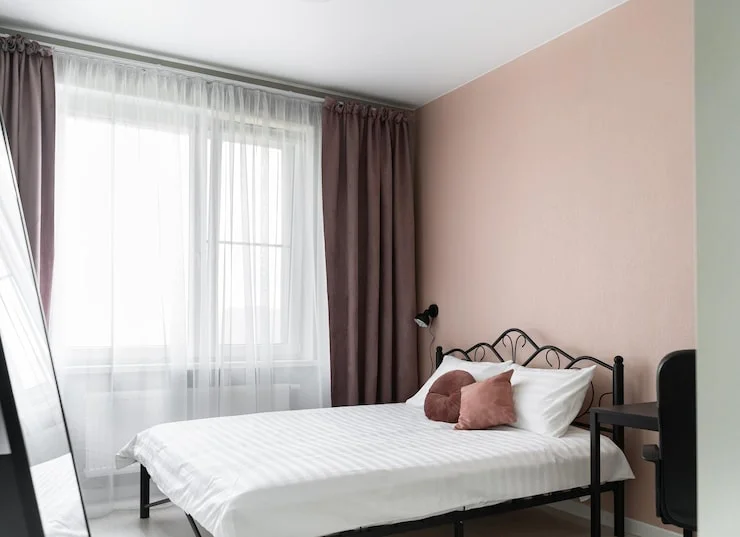
A large mirror placed opposite or near a window bounces natural light around the room and makes the space feel brighter and wider . One big mirror works better than several small ones, which just add more visual clutter. A leaner mirror against the wall costs little and needs no drilling.
Curtains matter more than most people think. Mount the rod several inches above the window frame, as close to the ceiling as you can get it. This draws the eye upward and makes the ceiling seem higher . Let the curtains fall all the way to the floor. Short curtains that stop at the sill cut the wall in half and make the room feel boxier than it is. Light, airy fabrics let daylight through while still giving you privacy.
You May Also Like: The School Bathroom: A Hidden World of Challenges and Opportunities
Add Warmth With Natural Materials and Small Touches
Wood tones, rattan, and a couple of houseplants soften hard edges and reflect warm light beautifully . You do not need many. A wooden bedside caddy can replace a bulky nightstand in a tiny room. A woven basket holds blankets or laundry without looking like a plastic bin.
Small shelves with a lamp, a photo, and a scented candle create what one designer calls micro-warmth. It feels collected rather than staged. The risk is clutter, so pick one or two spots for these vignettes and cozy bedroom ideas for small rooms.
If you want to test a paint color without committing, removable wallpaper gives the same impact on one accent wall with less risk. A muted terracotta or deep mustard behind the bed creates depth without overwhelming the room . Paint is affordable and reversible, which matters if you rent or might sell someday.
What to Skip?
Some common small-room advice does more harm than good. Do not push every piece of furniture flat against the walls to create open floor space in the middle. Leaving a small gap between the bed and the wall actually makes the room feel more spacious, not less . Do not buy a set of matching tiny furniture. A few larger pieces with storage do more for both function and calm. And do not rely on one bright overhead light to solve everything. Layered low light is what makes a room feel like a place to rest rather than a place to get ready.
A Small Room Can Feel Like Shelter
There is a reason people sleep well in small bedrooms. A bedroom is not a living room. It is a place where you lie down and let your guard down. Walls that sit close read as shelter, not limitation . The bed fills the room the way a nest is filled. Everything you need is within reach.
You do not need to spend a lot or renovate. You need to make a few decisions in the right order. Put the bed in the right spot. Turn off the big light and turn on a lamp. Let the bedding carry the color and the softness. Keep one surface clear. That is enough to turn a tight room into the coziest corner of your home.