
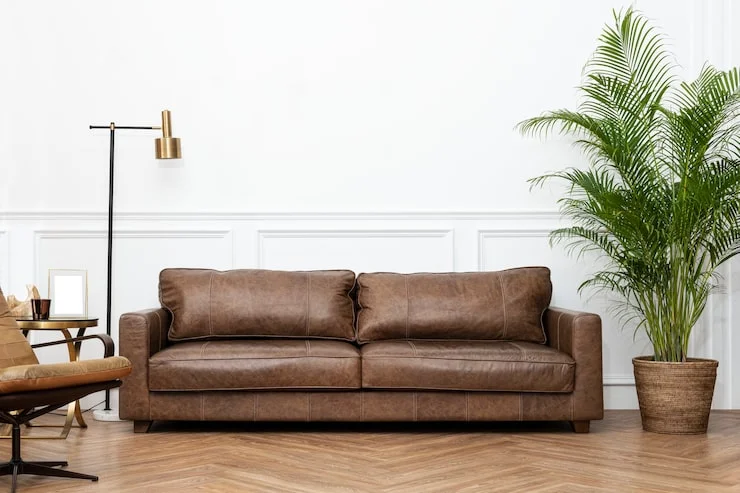
A brown sofa is one of the most practical pieces of furniture you can own. It hides stains. It ages well. It works with almost any style you already have in your home. But here is the problem most people run into: you bring the sofa home, place it against the wall, and suddenly the room feels heavy. Dark. Flat. You start wondering if you made a mistake.
You did not make a mistake. Brown is a warm neutral, which means it sits closer to a background color than a statement piece . Your sofa is not the problem. The colors around it are. This guide walks through the wall colors, accent shades, rugs, and textures that make a brown sofa look intentional instead of accidental. No vague suggestions. No lists without explanation. Just real combinations that living room color combinations with brown sofa.
First, Look at Your Sofa Before You Look at Paint
Brown is not one color. It never has been. The brown of a cognac leather club chair is not the same brown as a chocolate velvet sectional, and they do not want the same room around them.
Your first job is simple. Take your sofa outside, or bring it near a window with natural light. Look at it honestly. Does it lean reddish? Golden? Orange? Or does it look grayish, ashy, almost cool? Warm browns have red, yellow, or orange hiding inside them. Cool browns carry gray or taupe notes .
This matters because a warm brown sofa placed against a cool gray wall will suddenly look orange. The wall makes the sofa do something it was not doing before. You will blame the sofa. You will think about returning it. But the wall is the one causing trouble. Warm browns want warm walls. Cool browns can handle cooler walls. Neutral browns give you freedom, but only if you test before you commit .
Do not judge any paint sample under store lights. Do not judge it on your phone screen either. Tape a swatch to the wall behind your sofa. Look at it in the morning. Look at it at night with your lamps on. The color will change. That is not a flaw in the paint. That is just how light works.
Read Also: Small Living Room Layout Ideas
The Wall Colors That Make a Brown Sofa Look Best
If you want one answer that almost always works, this is it. A warm cream wall lets a brown sofa breathe without competing with it. The cream reflects light back into the room, which keeps the space from feeling like a cave, especially if your sofa is dark chocolate or espresso .
The mistake people make here is choosing a stark, cool white. Cool white has blue or gray hiding inside it. Put that next to a warm brown sofa, and the sofa will look yellow or orange by contrast . You want creams with names like Swiss Coffee or Pale Oak, shades that have a little warmth of their own. They do not fight the sofa. They hold hands with it.
This combination works in almost any style. In a small apartment with light wood floors, cream walls and a brown sofa feel open and calm. In a larger room with dark floors, the cream keeps the brown from swallowing the space. You can layer almost any accent color on top of this foundation later.
Sage and Olive Green: The Natural Partner
Green and brown is the easiest pairing in the world to get right. It is wood and leaves. It is the color of a tree trunk against moss. Your eye already knows this combination, which is why it feels calm before you even add furniture .
A soft sage green wall behind a brown sofa creates a room that feels grounded but not heavy. The green is cool enough to balance the warmth of the brown, but it is not so cool that it clashes. If your sofa is a lighter tan or caramel, sage is especially good because it keeps the room from turning into a wash of beige .
Olive takes this idea deeper. A dark olive wall with a cognac leather sofa is a combination that belongs in a mid-century room with a walnut sideboard and a brass lamp . The olive is rich enough to stand up to a strong brown, but it still feels like a color you can live with for years. You are not painting a trend on your wall. You are painting something that looks like it has always been there.
If you want to test this combination without painting an entire room, start with plants. A large fiddle leaf fig or a monstera beside your brown sofa gives you the green without the commitment. If you like how that feels, you will probably like the wall too.
Navy and Deep Blue: The Sharp Contrast
Here is where things get interesting. Blue and brown are opposites on the color wheel, which means they make each other look more like themselves. A navy wall behind a brown velvet sofa makes the brown look richer and the blue look deeper . It is a grown-up combination. It feels like a library or a study where someone actually reads books.
This pairing works best when the brown has some depth to it. A dark chocolate sofa against navy is dramatic and moody. A light tan sofa against navy is crisp and tailored. The danger is in the middle. A medium brown against a medium blue can feel muddy if you are not careful with lighting. Keep the navy deep enough that it reads almost black in the evening. Keep the brown rich enough that it does not disappear.
Brass and marble help here. A brass floor lamp beside the sofa, a marble coffee table, a few cream pillows to break up the dark surfaces. Navy and brown can handle a little luxury. They almost ask for it.
Terracotta and Warm Plaster: The Sunlit Option
If your room gets a lot of afternoon sun, or if you simply want a space that feels warm all year, terracotta and warm plaster finishes are worth considering. These are not flat paint colors so much as textures. Limewash and Roman clay give walls a soft, chalky depth that regular paint cannot copy .
A chocolate brown sofa against a terracotta plaster wall feels Mediterranean without being themed. Add a blush pink cushion or two, an arched mirror, and you have a room that looks like it was put together by someone who understands light and warmth. The texture matters as much as the color here. Smooth drywall with terracotta paint can feel flat. Plaster has movement. It catches light differently across the wall.
This combination works best with warm brown sofas, the kind with red or golden notes. A cool gray-brown sofa against terracotta might feel mismatched. Test your sofa against a terracotta sample first. If the brown looks alive next to it, you are on the right track.
What About Dark Walls? A Note on Moody Rooms?
Dark walls with a brown sofa can work. A deep green library with a brown leather Chesterfield is a classic for a reason . But dark walls are not for every room, and they are not for every person.
The rule with dark walls is simple: you need light from somewhere else. If your room has one small window and you paint the walls charcoal, the brown sofa will disappear into a cave. If your room has large windows or you are willing to invest in good lamps and brass fixtures that catch light, dark walls can make a brown sofa look expensive and intentional.
If you want to try a dark wall without repainting everything, start with an accent wall behind the sofa. Keep the other three walls cream or warm white. This gives you the drama without the gloom. You can always paint more later if you love it.
The Accent Colors That Bring a Brown Sofa to Life
Walls are the foundation. Accents are where the room starts to feel like yours.
Cream and Sand Pillows: The Ones You Actually Need
If you buy only two throw pillows for your brown sofa, buy cream and sand. Light neutrals give the brown contrast without competing with it, and they stop a dark sofa from becoming a black hole in the middle of the room .
Cream reads crisp and bright. Sand sits closer to the sofa’s own tone, so it softens rather than pops. Together they create a base that makes every other accent color easier to add. A rust pillow looks more deliberate next to a cream pillow than it does alone. A sage cushion feels calmer when there is sand beside it.
The number matters too. Three to five accent pillows on a standard sofa is enough. Two neutrals plus one statement color is a formula that almost always works . You are not decorating a catalog page. You are making a place where people sit down.
You May Also Like: How to Make a Living Room Look Bigger Naturally
Rust and Mustard: Warmth Without Going Orange
Rust is essentially brown with the volume turned up. It shares the same warm base as your sofa, so it reads as part of the same family rather than a clash . A rust velvet cushion on a brown leather sofa feels like it was always meant to be there. It adds depth without adding a new color temperature to the room.
Mustard does something different. It lifts. A brown sofa can feel heavy in the winter, especially if your walls are dark or your room does not get much sun. Mustard yellow brings light into the room without requiring you to repaint anything . It is slightly retro, slightly unexpected, and it works especially well if your walls are white or living room color combinations with brown sofa.
The trick with both of these colors is restraint. One rust pillow and two cream ones. One mustard throw draped over the arm. You want the accent to look like a decision, not an accident.
Sage and Olive Accents: The Calm Choice
If you painted your walls cream and you want to bring green in through textiles instead of paint, sage and olive pillows are the way to do it. Sage is soft and dusty, the gentlest of the greens. Olive is grounded and slightly murky in the best way. Moss is the deepest and works best on a lighter brown sofa or as a strong contrast on a dark one .
Two greens on one sofa can work, but they need to be clearly different. Sage next to moss looks intentional. Two shades that are almost the same look like a laundry mistake. Keep the rest of the pillows neutral so the greens have room to breathe.
Blush and Dusty Pink: The Unexpected One
This is the combination most people skip, and they should not. Pink against brown looks considered rather than sweet because brown takes the sugar out of it . Blush is barely pink, closer to a warm neutral. It adds softness to a room that might otherwise feel too woody and grounded.
This pairing works best in rooms with plenty of daylight. A dark room with blush accents can feel odd, like a summer dress in winter. But a bright living room with a brown sofa and a few blush cushions feels modern and gentle. It is a small risk that usually pays off.
Blue and Slate: The Cool Contrast
If your sofa is warm-toned and you want to cool the room down without repainting, blue accents do the job. Slate is the grown-up choice, a grayish blue that works in almost any light. A true blue is classic and never looks wrong. Turquoise is for people who want the room to have an opinion .
Blue pillows on a brown sofa look especially good when you repeat the blue somewhere else in the room. A blue vase on the coffee table. A piece of art with blue in it. A throw blanket folded on a chair. One blue pillow alone can look lonely. Two or three blue touches across the room make it look like a plan.
Rugs, Curtains, and the Things People Forget
The wall and the pillows get all the attention. But the rug and curtains do just as much work, and they are easier to change.
The Rug Is Your Bridge
If your sofa and your floor are both brown, you have a problem. The sofa disappears into the floor. The room loses its shape. You need something between them.
A light rug is the simplest fix. Cream, oatmeal, or a pale jute rug creates a visual separation between the sofa and the floor . It lifts the sofa visually. The room feels larger and lighter. This is especially important if you have dark wood floors or warm orange-toned tiles. Two browns meeting directly is rarely what you want.
If you want pattern, a vintage or geometric rug with faded terracotta, sage, and cream tones can tie a warm brown sofa into a traditional or bohemian room . A modern geometric rug with gray and cream can pull a cool brown sofa into a contemporary space. The rug can supply the accent colors for the whole room if you let it. Pull one color from the rug for your pillows and repeat it in a piece of art. The room will look like someone thought about it.
Curtains Should Not Match the Sofa
Brown curtains next to a brown sofa create a continuous dark wall. The room feels heavy on one side . Unless you are deliberately going for a moody, enveloping look, keep the curtains lighter than the sofa. Cream linen, off-white cotton, or even a soft gray will let the sofa stand out as the anchor without dragging the whole wall down with it.
Texture Matters as Much as Color
Two rooms can have the same colors and feel completely different because of texture. A smooth leather sofa against a smooth painted wall against a smooth wood floor is a lot of smooth surfaces. Your eye has nowhere to rest.
A woven jute rug, a chunky knit throw, a linen pillow, a matte ceramic lamp: these things break up the flatness . They give the light something to catch. They make the room feel layered even when the color palette is simple.
This is especially true with brown sofas because brown is a heavy color. Texture lightens it. A boucle pillow next to a leather sofa is a small contrast that makes a big difference.
Putting It Together: Three Palettes That Work
You do not need to invent a palette from scratch. Start with one of these and adjust as you go.
The Calm Room: Warm cream walls, a cream or oatmeal rug, sage pillows, a jute rug, and a few plants. This is the palette for people who want a room that feels like a deep breath. It works with almost any brown sofa and almost any style. You can add a mustard throw in the winter if it feels too quiet.
The Rich Room: Navy or deep olive walls, a brass lamp, cream pillows, a vintage rug with faded reds and blues. This is for rooms with good light and people who are not afraid of color on the walls. The brown sofa becomes the warm center of a room that feels collected and intentional.
The Bright Room: White or pale greige walls, a light rug, rust and cream pillows, a black lamp or frame for contrast. This is the palette for small rooms and rental apartments. It uses light to make the brown sofa feel like a choice rather than a hand-me-down.
The One Rule That Matters More Than Any Color
Before you buy anything, put the sample next to your sofa. Not in the store. Not on your phone. Next to the actual sofa in the actual room with the actual light.
A paint chip that looks perfect under fluorescent lights can look green or pink or gray in your living room. A pillow that looks rust online can look orange in person. A rug that looks cream on a screen can look yellow against your floor.
Bring the sample home. Hold it against the sofa. Look at it in the morning. Look at it at night. If it still looks right, buy it. If it looks wrong in any light, keep looking.
Your brown sofa is not a problem to solve. It is a warm, forgiving neutral that can handle almost any color you put next to it. The rooms that look best are not the ones with the trendiest paint or the most expensive pillows. They are the ones where someone took the time to look at what they already had and chose colors that made it feel alive.