
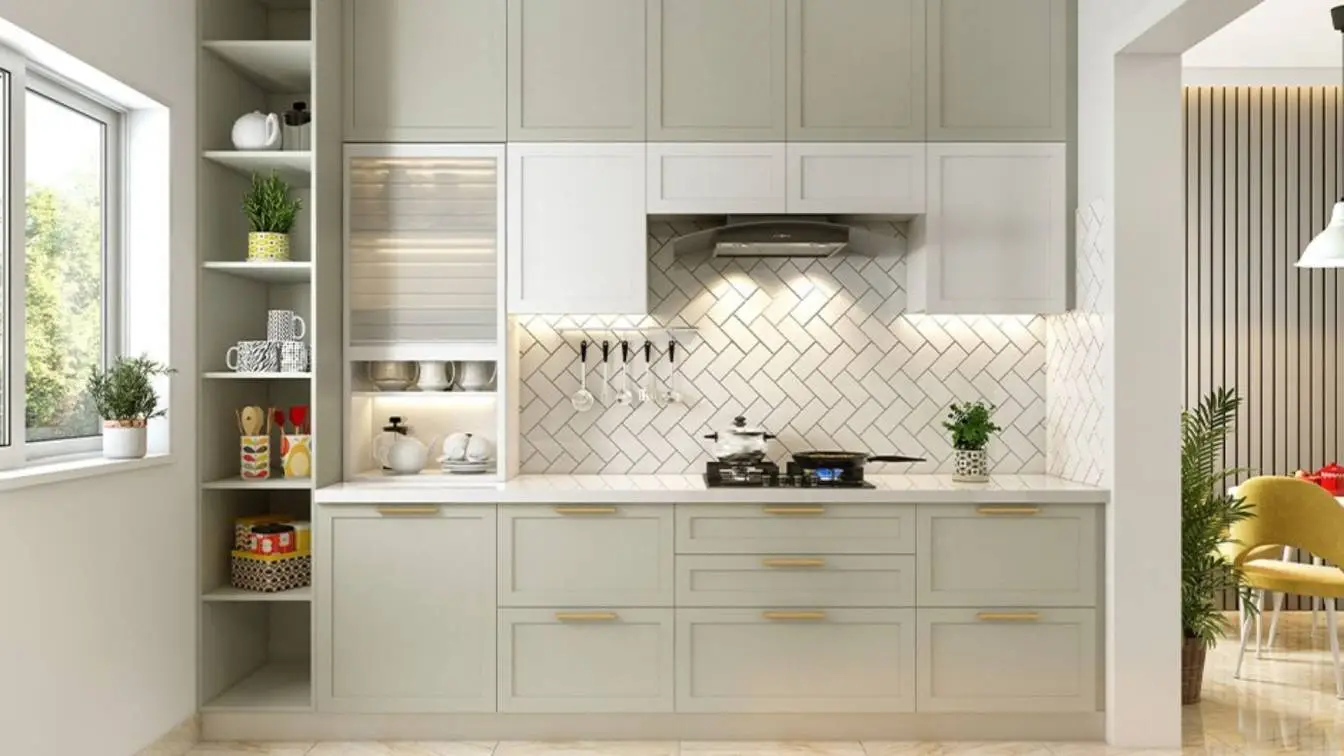
You open your kitchen pantry. Things fall out. You cannot find the rice. The bag of chips is crushed. This is a small space problem. Many homes have a small pantry. Some homes have no real pantry at all. Just a narrow cabinet. Or a few shelves in a corner.
But you need a place for food. For cans. For spices. For extra oil and vinegar. When space is small, you must be smart. You do not need a big renovation. You do not need to spend a lot of money. You need clear steps. You need ideas that work right now.
This article gives you those ideas. You will learn how to see your small pantry in a new way. You will learn simple changes that make a big difference. And you will keep the space neat for a long time.
Transform Your Small Kitchen Pantry with These Organization Tips
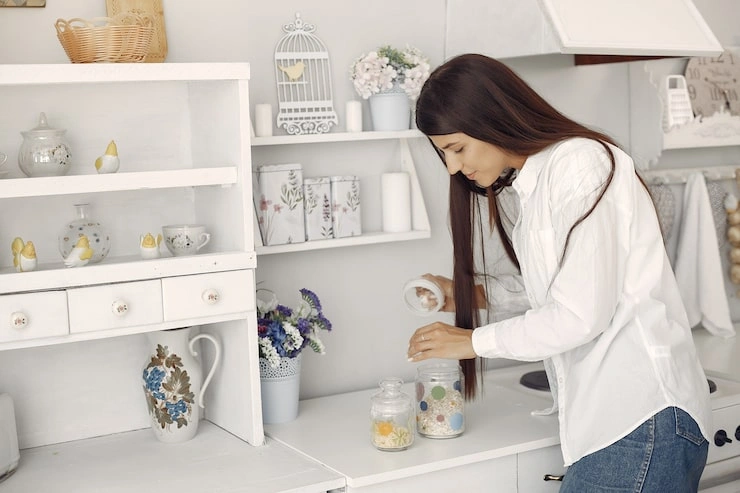
First, Take Everything Out
You cannot fix what you cannot see. So take every single thing out of your pantry. Put it on your kitchen counter or your dining table. Yes, everything. The old pasta. The half-eaten crackers. The three bottles of the same hot sauce.
Why do this? Because you need to know what you have. Most small pantries are not too small. They are just too full of things you do not use. When you take everything out, you see the truth.
Now sort things into three groups. Group one is food you will eat this week. Group two is food you will eat later. Group three is food that is old or bad. Throw group three away right now. Do not feel bad. It is okay to let go of old food.
This first step is the most important. Without it, no organization idea will help. So do not skip it.
Clean Every Shelf and Wall
Now your pantry is empty. This is a rare chance. Take a wet cloth. Wipe every shelf. Wipe the back wall. Wipe the door if you have one. Small spaces collect crumbs and dust. You might find old spills. You might find a smell you do not like.
Cleaning does two things. First, it makes the space ready for food again. Second, it helps you see the real size of your pantry. When dirt and mess are gone, the space looks bigger. You feel better about using it.
Let the shelves dry completely before you put anything back. Wet shelves can make boxes soft. Soft boxes break and spill.
Read Also: Smart Kitchen Design Ideas For Modern Homes
Look at Your Pantry Like a New Room
Now stand back. Look at the empty shelves. How deep are they? How tall is the space between shelves? Is there a door? Is there a wall on the side? Every small pantry has hidden space. You just do not see it when food is in the way.
Measure the height between shelves. Write those numbers down. Measure the depth of the shelf. Write that down too. These numbers will help you buy the right bins and boxes. Wrong size bins waste space. Right size bins use every inch.
Also look at the door. The inside of the door is a wall you have not used. That is free real estate. More on that later.
Put Things Back in Groups
Do not just throw things back on the shelves. That is what made the mess in the first place. Instead, make groups.
Here are common groups for a kitchen pantry:
- Canned foods like beans, tomatoes, and soup
- Breakfast foods like cereal, oatmeal, and pancake mix
- Snacks like chips, nuts, and crackers
- Baking supplies like flour, sugar, and chocolate chips
- Pasta and rice
- Oils, vinegars, and sauces
- Spices and seasonings
Put each group in its own spot. You can use a bin or a basket for each group. But you do not need to buy bins yet. First, just put the groups on different shelves. See how they fit.
If a group is too big for one shelf, split it. For example, put canned beans on one shelf and canned tomatoes on another. The goal is to see every food clearly. When you see it, you will use it. When you do not see it, you will buy more and waste food.
Use Clear Containers for Loose Foods
Many foods come in bags that do not stand up. Think of rice, flour, sugar, pasta, and cereal. These bags fall over. They spill. They hide behind each other.
Put these loose foods into clear containers. Glass jars work well. Plastic bins with lids work well too. The key is clear. When you see the food, you remember you have it. When you see how much is left, you know when to buy more.
Also, clear containers look clean. A shelf of clear containers looks calmer than a shelf of crinkly bags. That calm feeling is part of good organization.
Pick containers that are square or rectangle. Round containers waste space because they leave gaps. Square ones sit next to each other with no wasted room.
Make the Most of High Shelves
Small pantries often have tall shelves. The top shelf can be hard to reach. So do not put everyday food up there. Put food you do not need often. Extra cans. Party snacks. Holiday baking supplies.
But you must still reach that top shelf safely. A small step stool is a good tool. Keep it nearby. Not in the pantry. The pantry is too small for a stool. Keep it under the kitchen sink or in a closet.
For the middle shelves, put food you use every week. This is the easy reach zone. Your cereal, your cooking oil, your coffee. Keep these things at your eye level or hand level.
The lowest shelf is hard for some people to bend down to. So put heavy things there. Big bottles of oil. Large bags of rice. Multiple cans of the same food. Heavy things are safer on the bottom.
Use the Back of the Door
The inside of the pantry door is empty space. Most people ignore it. That is a mistake.
You can hang many things on a door. A simple over the door rack works well. Look for one with small wire shelves. These shelves can hold spice jars, small cans, or sauce packets.
You can also hang a clear shoe organizer on the door. The kind with pockets. Put one snack in each pocket. Put spice packets in a pocket. Put small tools like a can opener in a pocket. This is a very cheap way to add storage.
Do not hang heavy things on the door. The door hinges can break. Heavy jars or cans belong on regular shelves. Light things belong on the door.
Add Small Shelves Inside the Pantry
Sometimes a shelf is too tall. You put one layer of cans on it. The space above the cans is wasted. You can fix this with small shelves that sit on top of your regular shelf.
These are often called shelf risers. They are little stands. You put them on a shelf. Then you put cans or jars under them and on top of them. This doubles your space.
You can find shelf risers at home goods stores. They are not expensive. Look for wire ones. Wire lets you see through to the back. That is better than solid ones.
Another trick is using a small lazy susan. That is a spinning tray. Put it on a shelf. Put small jars or bottles on it. Spin it to reach the ones in the back. This is very good for hot sauce bottles, salad dressing, or spice jars.
Label Everything in a Simple Way
Labels help everyone in the house. They help you put things back in the right spot. They help kids find their own snacks. They help you remember what is in a closed bin.
Do not use fancy words on your labels. Just write the name of the food. "Rice" not "Long grain white rice for dinners." "Cereal" not "Morning breakfast flakes." Keep it short.
You can use a simple label maker. You can use masking tape and a pen. Both work the same. The goal is not beauty. The goal is clarity.
Put the label where you see it. On the front of a bin. On the edge of a shelf. On the front of a jar. Do not put labels on top of lids. You will not see them.
You May Also Like: Conceal Dryer Vent Above Kitchen Along Top Of Cabinets
Keep the Floor Empty
In a small pantry, the floor is tempting. You want to put big things there. A case of water. A bag of potatoes. A big bottle of oil.
Do not do this. When the floor is full, you cannot clean. Crumbs build up. Bugs come. And you trip over things when you reach for other food.
The only thing on your pantry floor should be a low bin for potatoes and onions. That is it. Everything else goes on a shelf. If a shelf is too short for a big item, that item does not live in the pantry. Find another spot in your kitchen for it.
Make a Simple Rule for Your Family
- A good system only works if you keep using it. So make one simple rule. Here are some examples.
- Rule one: Return things to their labeled spot before you close the pantry door.
- Rule two: No food goes into the pantry without a clear container or a label.
- Rule three: Once a week, check for old food and throw it out.
- Pick one rule. Write it on a small note. Tape that note inside the pantry door. When everyone follows the rule, the space stays organized.
Fix the Most Common Small Pantry Problems
Some small pantries have extra problems. Here are three common ones and how to fix them.
Problem one: The shelves are too deep. You put food in the front. Food in the back gets lost and goes bad. Fix this by using bins that pull out. Like small drawers. When you pull the bin, you see everything inside. Or use only the front half of the shelf. Put tall items in the back. Short items in the front.
Problem two: The pantry is a weird shape. Maybe it is very narrow. Maybe it is under the stairs. Fix this by buying custom fit pieces. A piece of wood cut to the right size becomes a new shelf. Small magnetic strips on the wall hold spice tins. You do not need a perfect rectangle to have an organized pantry.
Problem three: You have too many of the same thing. You buy canned tomatoes every week but you already have ten cans. Fix this by keeping a small note inside the pantry. Write down what you have too much of. Check the note before you go shopping.
When to Buy New Things for Your Pantry?
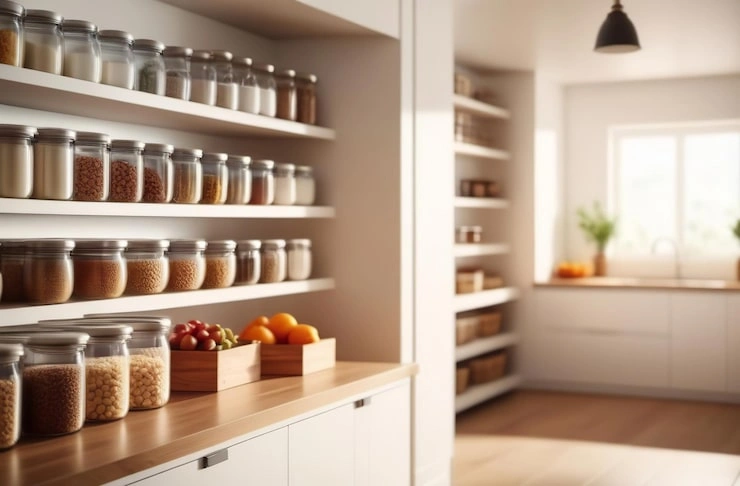
You do not need to buy anything to start. The first steps of taking everything out, cleaning, grouping, and putting back are free. But after you do those steps, you will see what you need. Maybe you need clear jars. Maybe you need a door rack. Maybe you need shelf risers. Make a list. Buy one thing at a time. You do not need a perfect pantry in one day. A little better each week is good enough.
A Real Day to Day Example
Let me show you how this works in a real kitchen.
Sarah has a small pantry. It is one cabinet next to her fridge. The cabinet is 12 inches deep and 30 inches wide. It has three shelves.
First, Sarah took everything out. She found four bags of opened pasta. She threw away old spices from three years ago. She cleaned the shelves.
Then she grouped her food. Cans on the bottom shelf. Pasta and rice on the middle shelf. Snacks on the top shelf. She put her cooking oils in a small bin on the bottom shelf so they do not tip over.
She bought two clear jars for flour and sugar. She put a small door rack on the inside of the cabinet door. That rack holds all her spice jars. Now she sees every spice.
She made a label for each shelf. "Bottom shelf cans and oils." "Middle shelf pasta and rice." "Top shelf snacks."
Sarah spent 15 dollars total. Her pantry is not in a magazine. But she can find her food. Nothing falls out when she opens the door. And she stopped buying food she already has.
Keeping Your Small Pantry Good for Months
The work does not end after one day. But the daily work is very small.
- Once a week, open your pantry. Look for one thing that is out of place. Put it back. Look for one old thing. Throw it away. That takes two minutes.
- Once a month, take everything out of one shelf. Clean it. Put things back in order. Rotate which shelf you do each month. That takes five minutes.
- When you buy new food, put it behind the old food. This is called first in first out. The older food gets eaten first. Nothing goes bad at the back of the shelf.
Conclusion
Your small kitchen pantry can work for you. It does not have to be a source of stress. The size of the pantry does not decide how organized it is. Your actions decide that. Start with one shelf today. Take everything off it. Clean it. Group the food. Put it back neatly. That one small win will feel good. Then do another shelf tomorrow. You do not need a perfect pantry. You need a pantry that helps you cook and eat without frustration. The ideas in this article are simple because simple works. Use what fits your space. Ignore what does not.